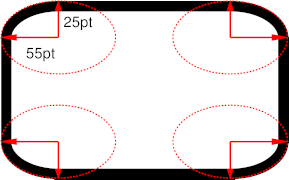
This module introduces the foo property and related values, which do bar and baz.
CSS is a language for describing the rendering of structured documents
(such as HTML and XML)
on screen, on paper, in speech, etc.
Status of this document
This is a public copy of the editors' draft.
It is provided for discussion only and may change at any moment.
Its publication here does not imply endorsement of its contents by W3C.
Don’t cite this document other than as work in progress.
The (archived) public mailing list
www-style@w3.org
(see instructions)
is preferred for discussion of this specification.
When sending e-mail,
please put the text “css-foo” in the subject,
preferably like this:
“[css-foo] …summary of comment…”
Look at the mark-up in this section for examples.
See the documentation for more precise instructions.
The companion of this template shows the processed result.
To refer to HTML, use [HTML40] (note the double square brackets).
To make a normative reference,
insert a “!”, like this:
[CSS3SYN]
The currently available list of bibliographic data can of course be extended.
We write about a property such as foo like this
and about a piece of CSS code like this: foo: bar.
(Note that if it looks like a "property: value",
it’ll automatically link to the property.)
Inline HTML and XML are similar,
but use the CODE element: <blockquote>...</blockquote>
and <r:xyz>...</r:xyz>.
Note: Note that the property will automatically be linked to its definition.
To define terms into the index,
there are many variants,
but hopefully the simplest
will be the most common.
Note: Note that you can add non-normative notes like this.
Of course, multi-paragraph notes are also possible: just enclose them in a div:
Note that this note is a multi-paragraph note.
It doesn’t need to have two paragraphs, but it could.
Displayed examples come in eight different types:
CSS examples that need no separate paragraph of explanation are put in a simple PRE:
EM { font-style: italic }
CSS examples that need extra text need a DIV.
The following example is the same as the previous one,
but now it is explained:
EM { font-style: italic }
Illegal CSS examples (examples of errors) are the same,
but with class "illegal example".
Examples of HTML and XML code have class "html" and "xml"respectively,
but are otherwise ditto.
A formal definition of a property looks like this:
Define values using a dl.
Note that the dl wrapper
specifies the default dfn type and what property it’s for,
so you don’t have to repeat that information in each individual definition.
Cross-references are created by enclosing a term or phrase in <dfn>
(like the word cross-references earlier in this sentence).
Then an <a> without an href='' attribute
with the same text content will automatically be linked.
Both <dfn>s and <a>s are typed,
which allows the same text to appear as different types of terms without a collision.
The type can often be inferred,
but sometimes it needs to be specified,
like when you’re linking to a Foo WebIDL interface.
And a figure with a caption is done like this:
Just a random image.
Use SVG if you can.
Otherwise, W3C prefers PNG over GIF (obviously, since PNG is a W3C Rec).
Don’t forget to write the alt.
An open issue or editorial remark is OK in a WD,
but they should be resolved/removed before the document goes to “CR”
(Candidate Recommendation).
Use class=“issue”.
Inline issues will be copied into an Issues Index at the end of the document,
for easy reference.
/* Write WebIDL in a <pre class="idl"> as plain text. */
  interface Foo {
    readonly attribute DOMString bar;
    boolean baz(FooDict Arg1, (DOMString or Foo) Arg2);
  };

  dictionary FooDict {
    sequence<Foo> foo;
    boolean bar;
    DOMString baz = "qux";
  };
Conformance
Document conventions
Conformance requirements are expressed with a combination of
descriptive assertions and RFC 2119 terminology. The key words "MUST",
"MUST NOT", "REQUIRED", "SHALL", "SHALL NOT", "SHOULD", "SHOULD NOT",
"RECOMMENDED", "MAY", and "OPTIONAL" in the normative parts of this
document are to be interpreted as described in RFC 2119.
However, for readability, these words do not appear in all uppercase
letters in this specification.
All of the text of this specification is normative except sections
explicitly marked as non-normative, examples, and notes. [RFC2119]
Examples in this specification are introduced with the words "for example"
or are set apart from the normative text with class="example",
like this:
This is an example of an informative example.
Informative notes begin with the word "Note" and are set apart from the
normative text with class="note", like this:
Note, this is an informative note.
Conformance classes
Conformance to this specification
is defined for three conformance classes:
A style sheet is conformant to this specification
if all of its statements that use syntax defined in this module are valid
according to the generic CSS grammar and the individual grammars of each
feature defined in this module.
A renderer is conformant to this specification
if, in addition to interpreting the style sheet as defined by the
appropriate specifications, it supports all the features defined
by this specification by parsing them correctly
and rendering the document accordingly. However, the inability of a
UA to correctly render a document due to limitations of the device
does not make the UA non-conformant. (For example, a UA is not
required to render color on a monochrome monitor.)
An authoring tool is conformant to this specification
if it writes style sheets that are syntactically correct according to the
generic CSS grammar and the individual grammars of each feature in
this module, and meet all other conformance requirements of style sheets
as described in this module.
Partial implementations
So that authors can exploit the forward-compatible parsing rules to
assign fallback values, CSS renderers must
treat as invalid (and ignore
as appropriate) any at-rules, properties, property values, keywords,
and other syntactic constructs for which they have no usable level of
support. In particular, user agents must not selectively
ignore unsupported component values and honor supported values in a single
multi-value property declaration: if any value is considered invalid
(as unsupported values must be), CSS requires that the entire declaration
be ignored.
Experimental implementations
To avoid clashes with future CSS features, the CSS2.1 specification
reserves a prefixed
syntax for proprietary and experimental extensions to CSS.
Prior to a specification reaching the Candidate Recommendation stage
in the W3C process, all implementations of a CSS feature are considered
experimental. The CSS Working Group recommends that implementations
use a vendor-prefixed syntax for such features, including those in
W3C Working Drafts. This avoids incompatibilities with future changes
in the draft.
Non-experimental implementations
Once a specification reaches the Candidate Recommendation stage,
non-experimental implementations are possible, and implementors should
release an unprefixed implementation of any CR-level feature they
can demonstrate to be correctly implemented according to spec.
To establish and maintain the interoperability of CSS across
implementations, the CSS Working Group requests that non-experimental
CSS renderers submit an implementation report (and, if necessary, the
testcases used for that implementation report) to the W3C before
releasing an unprefixed implementation of any CSS features. Testcases
submitted to W3C are subject to review and correction by the CSS
Working Group.
An open issue or editorial remark is OK in a WD,
but they should be resolved/removed before the document goes to “CR”
(Candidate Recommendation).
Use class=“issue”.
↵
Inline issues will be copied into an Issues Index at the end of the document,
for easy reference.
↵